Simple Color Theory for Kids: Warm, Cool and Complementary
By the ColorNook editors · Updated 2026-11-29
Children do not need art class vocabulary to enjoy color, but a few simple ideas make coloring pages more interesting: primary and secondary colors, warm and cool colors, and complementary pairs. Below is a plain-language explanation, a color wheel kids can make in ten minutes, and five activities that turn ordinary coloring pages into color experiments.
The basics in kid-friendly words
Encyclopaedia Britannica describes the color wheel as a diagram that arranges colors in a circle to show how they relate. Here is what that means for young artists.
Primary colors
On the traditional painters' wheel (called RYB), the primary colors are red, yellow and blue. Britannica explains that they are called primary because you cannot make them by mixing other colors.
Secondary colors
Mix two primaries to get the secondary colors: - yellow + blue = green - yellow + red = orange - blue + red = violet
In-between colors
Mix a primary with the secondary next to it and you get an in-between (intermediate) color, such as red-orange or blue-green.
Warm and cool colors
Britannica notes that warm colors (red, orange, yellow and their neighbors) sit on one side of the wheel and cool colors (green, teal, blue, violet) on the other. Kids can remember it as "sun and fire" versus "water and ice."
Complementary colors
Colors directly across the wheel from each other, such as red and green, are complementary. Britannica says that side by side they "appear brighter and more vivid than they would on their own." That is why red and green look so bold on Christmas pages.
Analogous colors
Colors next to each other on the wheel, like yellow, yellow-green and green, are analogous. They look calm and harmonious together.
Make a paper color wheel (10 minutes)
You need paper, a cup to trace, and crayons, markers or colored pencils.
- Trace a circle and divide it into six "pizza slices."
- Color three slices with a gap between each: red, yellow, blue.
- In each gap, color the mix of its two neighbors: orange between red and yellow, green between yellow and blue, violet between blue and red.
- With pencils or crayons, kids can actually mix: color lightly in yellow, then go over it in blue to see green appear.
- Draw a line across the wheel to connect each color with its opposite. Those are the complementary pairs: red and green, yellow and violet, blue and orange.
Keep the wheel on the table during the activities below.
Five coloring-page activities
1. Primaries only
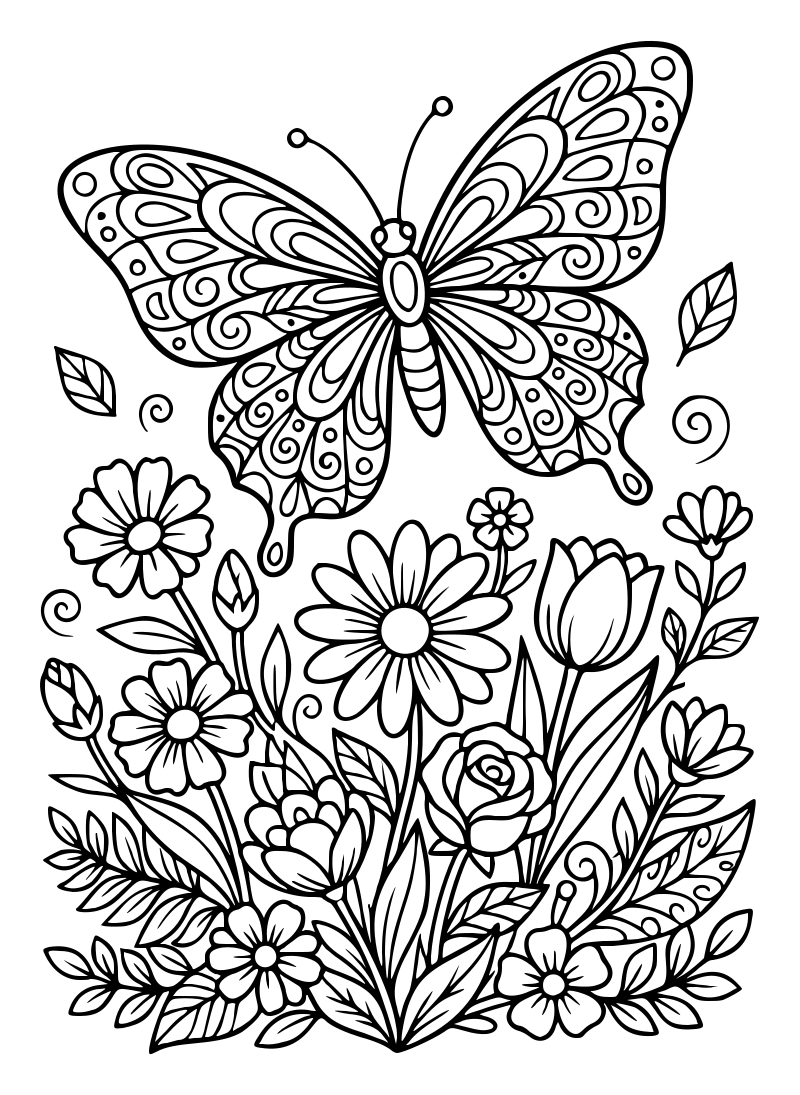
Give children only red, yellow and blue and a medium page such as the butterfly garden. Ask them to make green leaves and an orange butterfly by layering. Colored pencils and crayons layer best; markers mix less predictably.
2. Warm versus cool
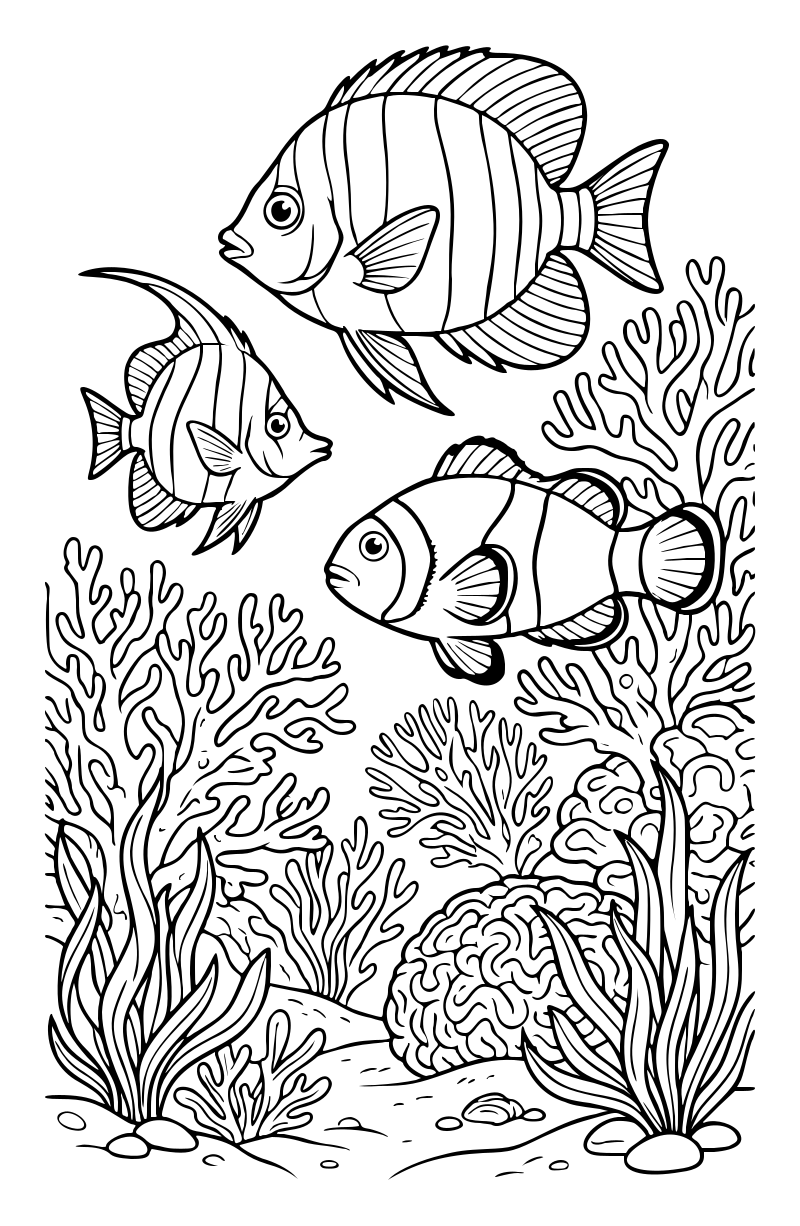
Print two copies of the same page, for example the tropical fish. Color one using only warm colors and one using only cool colors. Put them side by side and ask: which looks hotter? Which looks calmer? Which looks more like real ocean water?
3. Complementary pop
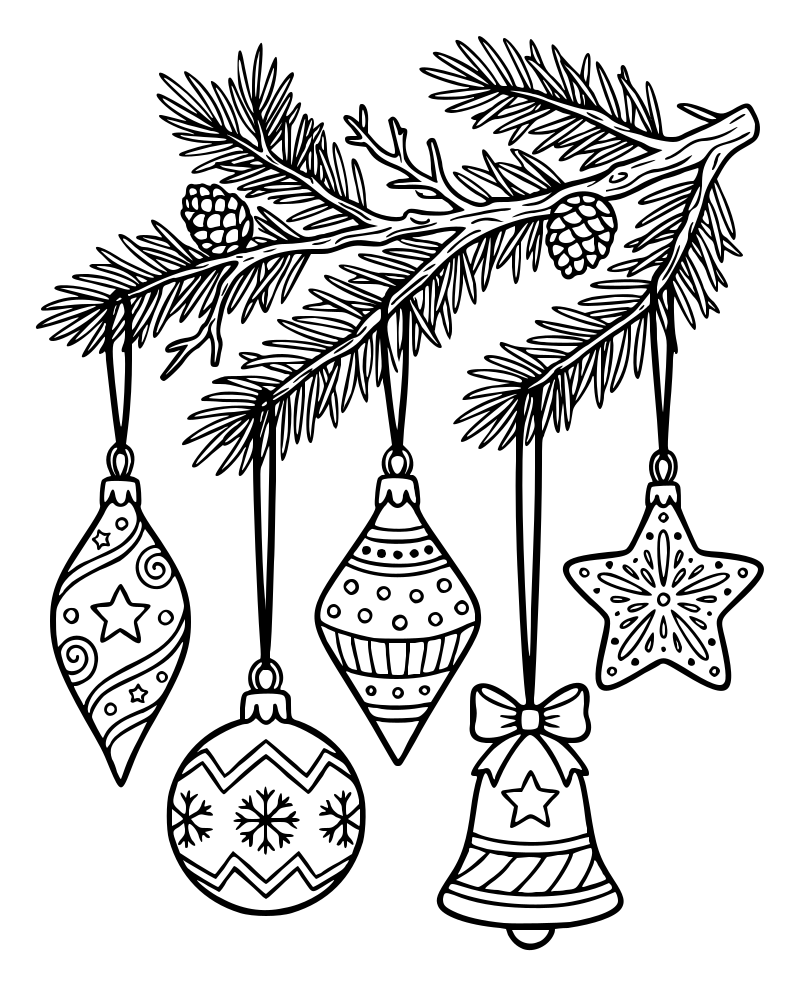
Pick one complementary pair, such as blue and orange. Color the main subject in one and the background in the other. Children quickly see how the subject jumps forward. It works well on the Christmas ornaments page with red ornaments on a green branch.
4. Analogous calm
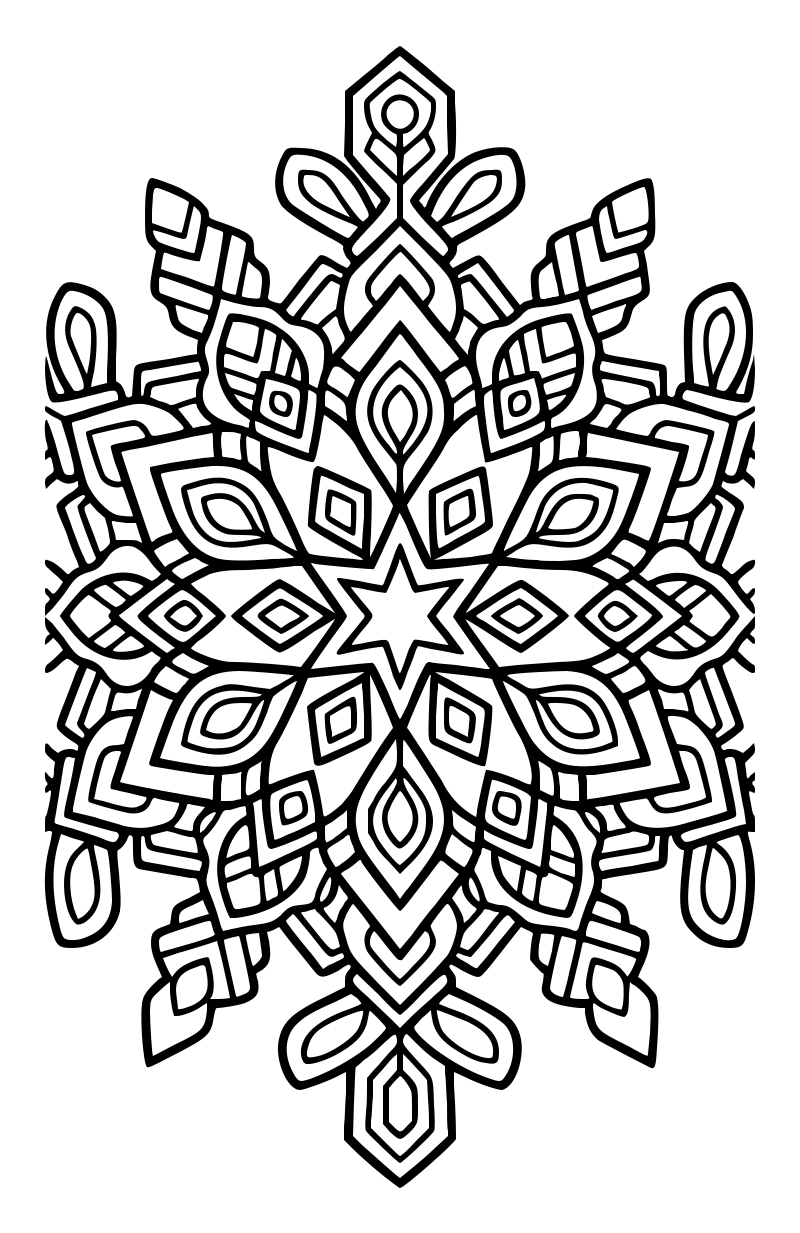
Choose three colors that sit next to each other on the wheel, such as blue, blue-violet and violet, and color a mandala using only those. The snowflake mandala looks wintry and peaceful this way. It is a nice quiet-time activity.
5. Color mood story
Give each child a page and ask them to pick colors for a feeling: "happy and sunny," "sleepy night," "stormy." Afterward, each child explains one choice. There are no wrong answers; the point is noticing that color changes mood.
Matching the lesson to the age
| Age | What to try | Tip |
|---|---|---|
| 3 to 4 | Naming colors, mixing two crayons | The CDC lists "names a few colors of items" by age 4; keep it playful |
| 5 to 6 | Primary and secondary colors, warm vs cool | Use big, easy pages so the focus is color, not detail |
| 7 to 9 | Complementary and analogous colors, the color wheel | Let them plan a palette before they start |
| 10 and up | Shading, tints (add white) and shades (add darker) | Detailed pages and colored pencils |
A note about screen colors
Children who also color online may notice that screens mix color differently. Britannica explains that screens use the RGB (red, green, blue) model, which adds light, while paints and crayons use subtractive mixing. That is why mixing on screen and on paper give different results, and it makes a good "why?" conversation for older kids.
The takeaway
Three primaries, three secondaries, warm on one side, cool on the other, opposites that pop: that is enough color theory to make every coloring page a small experiment. Print a few pages from the animals collection and try the warm-versus-cool challenge this week.
Frequently asked questions
What are the primary colors for kids?
On the traditional painters' color wheel, the primary colors are red, yellow and blue. Mixing two of them makes the secondary colors: orange, green and violet.
What are complementary colors?
Colors directly opposite each other on the color wheel, such as red and green. Placed side by side, they look brighter and more vivid.
What age can kids learn color theory?
Most children can name a few colors by about 4, according to the CDC. Mixing primaries works well from preschool, and warm, cool and complementary colors are a good fit from about age 6.