Crayons, Colored Pencils or Markers? What to Use by Age
By the ColorNook editors · Updated 2026-11-29
Short version: give toddlers and preschoolers chunky crayons or thick washable markers, move to colored pencils as children start holding tools between their fingers and thumb, and save fine-tip and alcohol markers for older kids and adults working on detailed pages. Match the tool to the page as well as the age: big shapes for broad tools, small spaces for sharp ones.
A quick comparison
| Tool | Best for ages | Good on | Watch out for |
|---|---|---|---|
| Chunky crayons | 2 to 5 | Easy pages with big shapes | Waxy buildup, hard to fill small gaps |
| Regular crayons | 4 and up | Easy and medium pages | Snapping under heavy pressure |
| Washable markers (broad tip) | 3 and up | Bold, fast coverage | Streaks, caps left off, wet paper if overworked |
| Colored pencils | 5 and up | Medium and detailed pages, blending | Need sharpening, light color if pressed softly |
| Fine-tip markers | 8 and up, adults | Mandalas and tiny areas | Can pill thin paper |
| Alcohol markers | Teens, adults | Smooth blends on detailed art | Bleed through paper by design |
Why age matters: grip comes first
Young children usually hold a crayon in a fist before they hold it with their fingers. The CDC's developmental milestones list "draws a circle, when you show him how" by age 3 and "holds crayon or pencil between fingers and thumb (not a fist)" by age 4. Those two milestones explain most of the advice in this guide.
- Fist-grip stage (around 2 to 3): thick tools win. A chunky crayon or a fat marker is easy to grab, does not break as easily, and puts down color even when a child scribbles fast. The CDC's tips for 3-year-olds even suggest an "activity box" with paper, crayons and coloring books.
- Finger-grip stage (around 4 to 5): regular crayons and pencils become manageable. Children can start to slow down near lines, so medium pages with a few smaller areas are a good stretch.
- Confident stage (6 and up): colored pencils and fine markers open up detailed pages, shading and color blending.
Every child moves at their own pace. If your child still prefers a fist grip, there is no need to force thin pencils. Keep the pages easy and the tools chunky.
Crayons
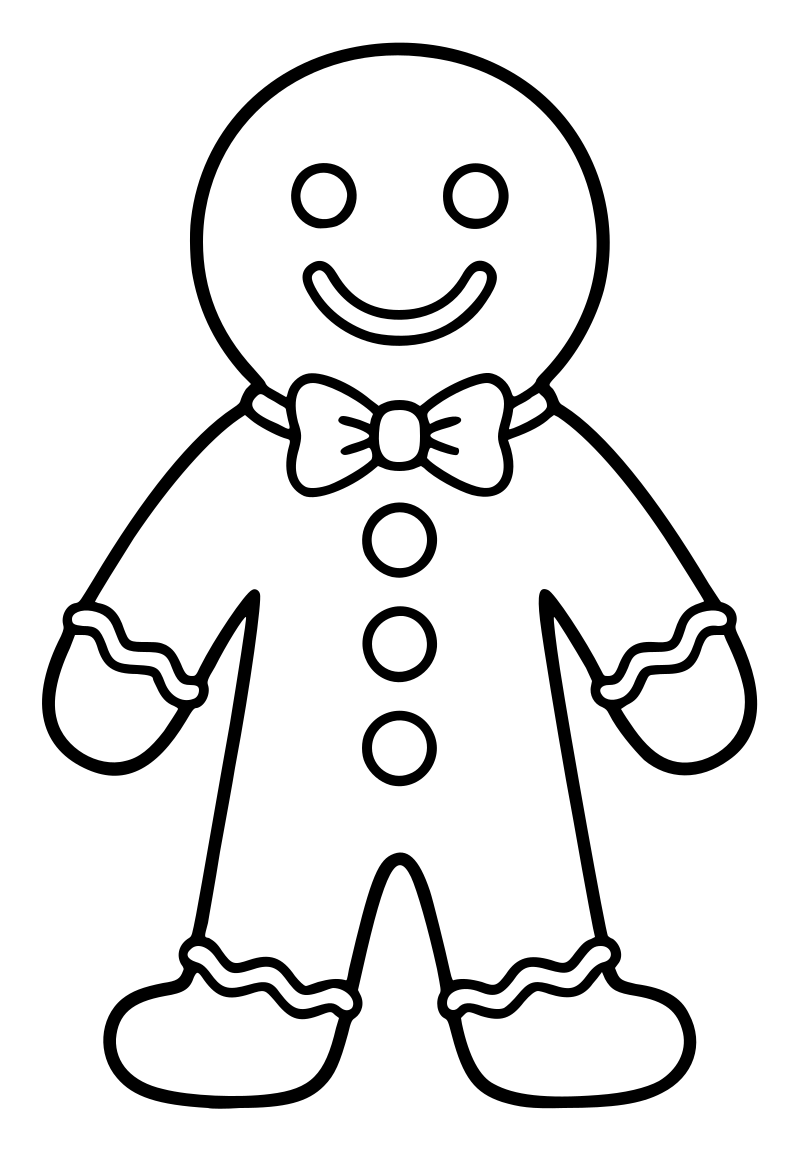
Crayons are cheap, sturdy and almost mess-free. They are the natural first tool for easy pages such as the gingerbread man, where the shapes are large and the outlines are thick.
Tips: - Peel the paper off a broken crayon and use it on its side to fill big areas quickly. - Press lightly first, then go over again for deeper color. Heavy pressure early on leaves a waxy layer that new colors slide over. - Crayons do not erase well, so suggest children color the main shape before adding details.
Washable markers
Markers give bright, even color with almost no pressure, which suits children whose hands tire quickly. Crayola says its washable products are designed to rinse off skin and most children's clothing, but that color can sometimes linger on skin "due to heavy color saturation"; soap and water usually work, and the company suggests baby wipes or baby oil if they do not.
For less mess: - Teach "cap on, click" after each color. - Color in one direction rather than scrubbing back and forth, which wets and tears thin paper. - Put a scrap sheet under the page.
Colored pencils
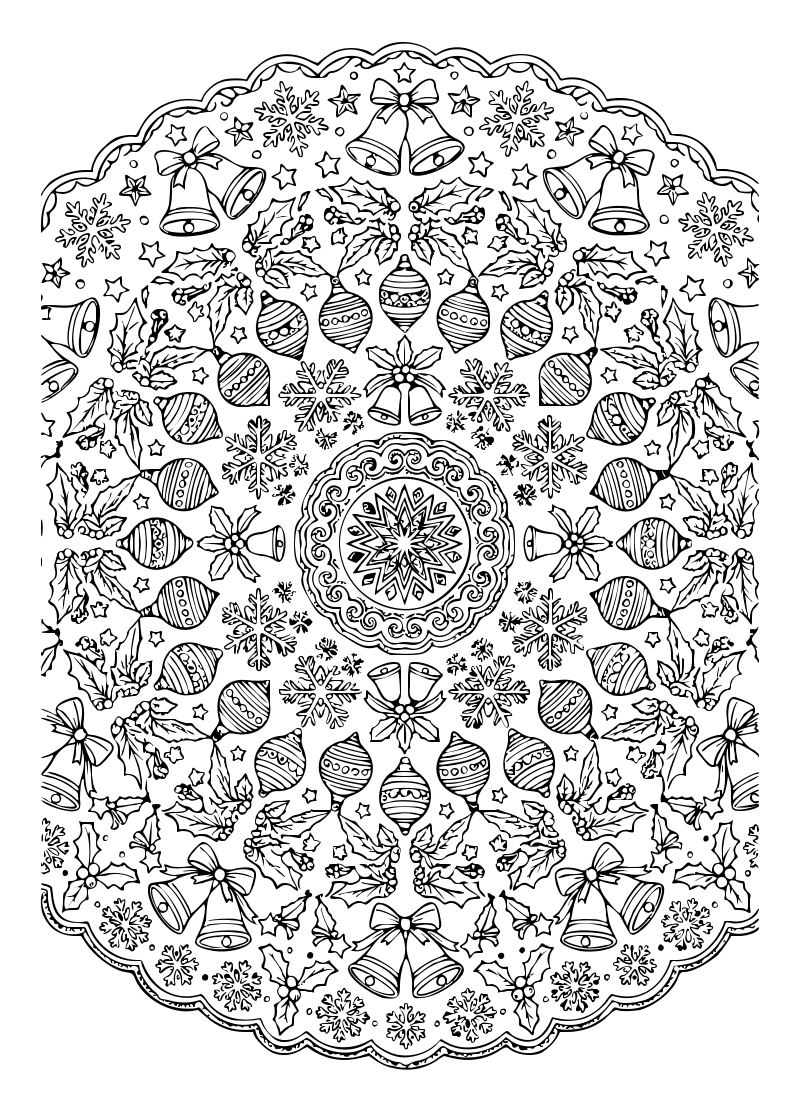
Pencils are the most precise tool in the box. They are the best choice for medium and detailed pages, such as the Christmas mandala, where many spaces are smaller than a marker tip.
Pencils also let you layer: color lightly in yellow, then go over part of it in red to get orange shading. A simple handheld sharpener is enough; keep the tips sharp for small spaces and slightly blunt for filling big ones.
Softer "artist" pencils give stronger color with less pressure, which helps if a child complains that their pencils are "too light." Harder student pencils last longer and are fine for most coloring.
Fine-tip and alcohol markers
Older kids and adults often move to fine-tip markers for crisp, even color in small areas. Alcohol-based markers blend beautifully but behave differently from washable markers. Crayola's own FAQ says alcohol-based markers "naturally bleed because of their ink composition" and recommends marker or bleed-proof paper, a blotter sheet directly behind the page, and light layers rather than heavy ink.
If you print at home, that means: - Print the page on heavier paper or cardstock if your printer supports it. - Slide a spare sheet behind the page before you start. - Do not color alcohol markers on a page that is lying on a book or table you care about.
Choosing paper to match the tool
Our printing guide covers paper in detail. In short: plain copy paper is fine for crayons and pencils, washable markers do best with a light hand, and heavier sheets help with markers and with any page that will be handled a lot or given as a gift.
Buying for a class or a group
For a classroom or a party table, shared caddies work better than individual sets. A practical mix for six children is one box of 24 crayons, one set of 12 broad washable markers and one set of 12 colored pencils with a sharpener. Put each color family in its own cup so children can find a color without dumping the box.
Then pick pages to match: easy Christmas pages for the youngest group, medium scenes for early elementary and mandalas for older kids who finish quickly.
The bottom line
There is no single best coloring tool, only the best tool for this child and this page. Start broad and forgiving, move to sharper tools as grip and patience grow, and keep a mix in the box so children can choose. Choosing is part of the fun.
Frequently asked questions
What should a 3-year-old color with?
Chunky crayons or thick washable markers. They are easy to hold in a whole-hand grip, do not need sharpening and forgive heavy pressure. Pair them with easy pages that have big shapes.
Do markers bleed through printer paper?
Water-based washable markers usually stay on top of ordinary copy paper if you color lightly. Alcohol-based markers bleed through by design, so use marker paper or a sheet behind the page.
Are colored pencils better for detailed pages?
Yes. A sharp pencil tip can fill the small spaces in mandalas and busy scenes, and pencils let you layer and blend. Crayons and broad markers are too wide for tiny areas.