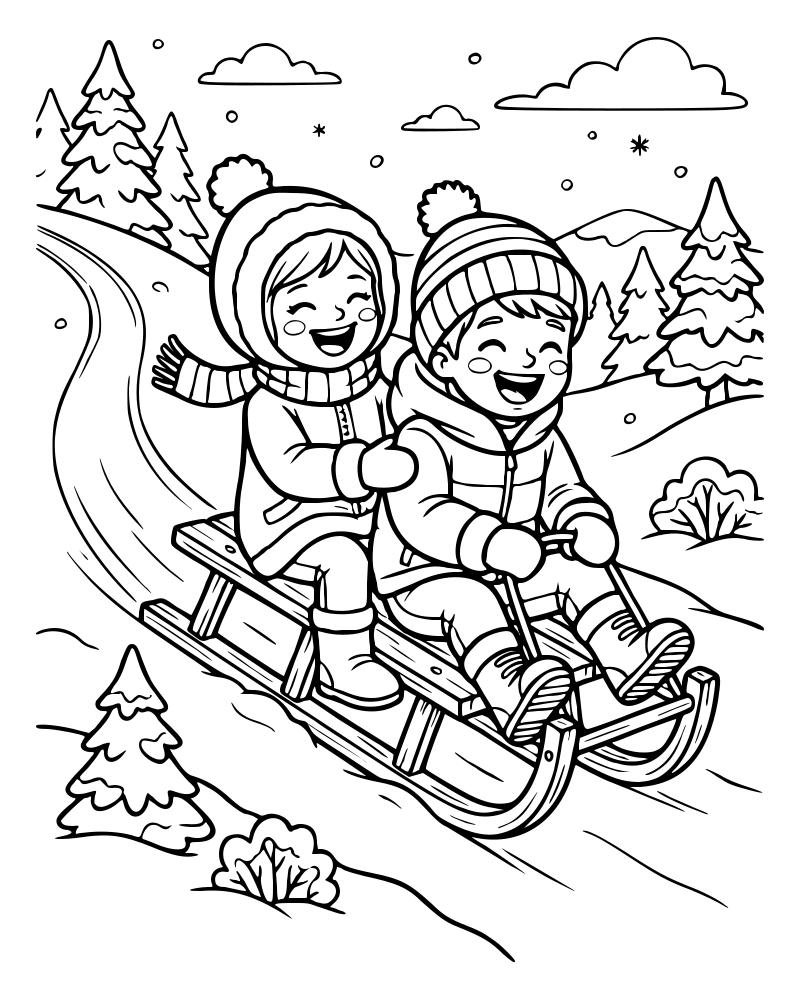
Screen-Light Winter Break Activities Built Around Coloring
By the ColorNook editors · Updated 2026-11-29
The easiest way to keep winter break calm and lower on screens is to give each day a simple theme and anchor it with one printable coloring page. The page becomes the starting point for a craft, a game, a story or a bit of active play, so kids always have a "next thing" that is not a tablet.
Below is a flexible 10-day plan, a short supply list, and a few rules that help it actually stick.
Why a plan helps
Long, unstructured days are where screen time tends to creep in. The American Academy of Pediatrics suggests families make a media plan and specifically recommends adding "fun swaps" like reading, outdoor play, family games and hobbies "so screens don't crowd out other important experiences." The AAP also notes that summer and holiday breaks are good times to review that plan.
You do not need a perfect schedule. A loose rhythm works: one creative block, one active block and one quiet block each day.
Keep movement in the day
Coloring is a sitting activity, so pair it with movement. According to the CDC:
- Ages 3 to 5: should be physically active throughout the day, with caregivers encouraging active play like jumping or riding a tricycle.
- Ages 6 to 17: need 60 minutes or more of moderate-to-vigorous activity each day, including vigorous activity, muscle-strengthening (like climbing) and bone-strengthening (like jumping) on at least 3 days a week.
For toddlers and preschoolers, the World Health Organization's guidelines for children under 5 recommend that sedentary screen time be no more than 1 hour a day for ages 2 to 4 ("less is better") and not recommended at all for 1-year-olds. WHO also encourages quality non-screen sitting time such as reading, storytelling, singing and puzzles.
Supply list (mostly free)
- Plain printer paper for coloring pages; a few sheets of cardstock if you have them
- Crayons, colored pencils or washable markers
- Scissors (child-safe), glue stick, tape
- Cardboard from delivery boxes, a paper towel tube or two
- String or yarn
- A clipboard or a hardcover book to color on away from the table
A 10-day winter break plan
Each day lists a coloring page, a hands-on extension and an active idea. Swap days freely.
| Day | Coloring page | Make or play | Move |
|---|---|---|---|
| 1 | Snowman with Top Hat | Cut it out and tape it to a window as a "guard" for the week | Build a real snowman, or a pillow snowman indoors |
| 2 | Kids Sledding Downhill | Draw a hill and number the "runs" from easiest to hardest | Sledding, or a cardboard "sled" pulled across the floor |
| 3 | Hot Cocoa Mug | Set up a pretend café menu with prices in buttons or coins | Dance break between "orders" |
| 4 | Snow Globe | Draw your own house inside an empty globe outline | Freeze dance: shake like snow, freeze when music stops |
| 5 | Any page from Winter | Color the same page twice, once in warm colors and once in cool ones, then compare | Winter walk: count five things that are white |
| 6 | An animal from Animals | Write or tell a three-sentence story about the animal | Animal moves: hop like a bunny, waddle like a penguin |
| 7 | A holiday page your family celebrates | Turn it into a card for a neighbor or grandparent | Walk it over or to the mailbox |
| 8 | Two pages of the same scene | "Spot the difference": one person colors, the other copies | Indoor obstacle course from cushions |
| 9 | Kids pick three favorites | Staple or tie them into a mini book (see our homemade coloring book guide) | Jumping jacks between pages |
| 10 | New Year pages | Make a "best of break" wall from everything colored this week | Countdown game: run to a spot and back before you hit zero |
Easy extensions for any page
- Color by instruction: call out "make the hat blue, the scarf striped." Good for listening skills and for siblings of different ages working on the same page.
- Cut-and-play: glue a colored figure to cardboard, add a paper stand and use it as a puppet or a board game piece.
- Texture rubbing: put a leaf or coin under the paper and rub with the side of a crayon to fill a section.
- Hide-and-seek pages: hide colored pictures around the house and give clues.
A sample day
This is one way a day might look for a 5- to 8-year-old. Adjust times to your family's routine.
- Morning: breakfast, then active play outside or an indoor obstacle course.
- Mid-morning: coloring page plus its "make or play" extension (about 30 to 45 minutes).
- Lunch and rest: books, audiobooks or quiet building.
- Afternoon: an errand, a walk, a library trip, or a playdate.
- Evening: a short, planned screen slot if your family uses one, then a calm wind-down.
Planning the screen slot in advance, rather than using it whenever boredom hits, makes it easier to hold the line.
Make the rules visible
The AAP's family media plan suggests a few rules that fit well with this kind of break:
- Screen-free zones, such as the dinner table and before bed.
- One screen at a time, turning off devices not in use.
- Turn off autoplay and notifications, which are designed to keep kids engaged longer.
- A plan for every family member, including adults, since parents are role models.
Write two or three of these on the back of a coloring page and post it on the fridge. Kids are more likely to follow rules they helped decorate.
Matching activities to age
- Ages 3 to 5: choose pages with big, simple shapes and keep coloring sessions short. Mix in plenty of movement. Our fine motor skills guide explains what to expect at this age.
- Ages 6 to 9: medium-detail pages, color-by-instruction games and story writing work well.
- Ages 10 and up: detailed scenes and mandalas, or let them design the day's plan and run it for younger siblings.
If it falls apart
Some days will not follow the plan, and that is fine. Keep a "boredom jar" of folded slips with quick ideas: color a page with your eyes closed for one minute, make a paper airplane from a page you finished, or trade pages with someone and finish theirs. The goal is not a perfect schedule; it is having an easy, screen-light option ready when kids ask, "What can I do now?"
Frequently asked questions
How much active play do kids need over winter break?
The CDC says children 3 to 5 should be active throughout the day, and children 6 to 17 need at least 60 minutes of moderate-to-vigorous activity every day. A break schedule should leave room for that, indoors or out.
Is coloring a good replacement for screen time?
Coloring is a calm, hands-on swap. The AAP suggests adding swaps like reading, outdoor play, family games and hobbies to a family media plan so screens do not crowd out other experiences.
How do I keep a winter break plan cheap?
Build each day around things you already have: printer paper, crayons, cardboard, tape and the outdoors. Free printable pages supply the theme, and most activities below cost nothing extra.